
Why machine safety software has become essential in industrial automation
In modern industry, protecting the operator no longer depends solely on physical barriers, guards and emergency stops, but also, and above all, on the logic that governs the machine. This is where safety software comes in: the set of programs dedicated to constantly monitoring a plant's operating conditions and stepping in automatically whenever a hazardous situation arises.
In this article we will look at what this type of software really is and how it works, the role it plays in plant safety and in protecting the people who work with machinery, how it fits into the European regulatory framework, today profoundly renewed by the EU Machinery Regulation 2023/1230, and what concrete benefits it brings to the companies that adopt it. In the final section we will explore the approach of HS Automation, which designs and develops the safety logic of its automation systems in-house.
What is safety software and how does it work
When we talk about safety software, we are referring to the programs that manage the safety functions of a machine or production line: controlled stopping in an emergency, speed monitoring, management of movable guards, control of light curtains and supervision of the signals coming from the field. Unlike the software that runs production itself, its sole mission is to prevent a fault, an error or abnormal behaviour from turning into a risk for people.
From control logic to safety software
To understand how it works, it helps to start from how an automated plant is built. Within an automation control panel there are a power section and a control section, where the programmable logic devices, the so-called PLCs, interpret the input signals and drive the outputs to motors, actuators and solenoid valves. Every connection is documented in the electrical diagrams, which represent the functional map of the entire system.
The role of the safety PLC
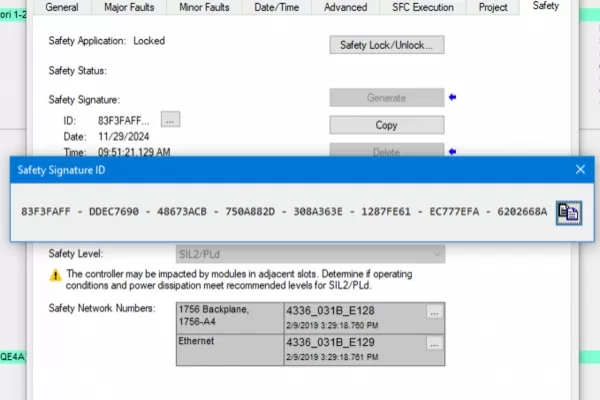
The heart of this logic is often a safety PLC, a controller with a redundant architecture and advanced diagnostics, certified to handle critical functions. While a standard PLC optimises performance and production cycles, the safety PLC is designed to ensure that, even when an internal malfunction occurs, the system always reacts in a predictable and conservative way. The separation, or alternatively the controlled integration, between process logic and safety logic is one of the most delicate aspects in designing reliable automation software, and it requires specific expertise on both the electrical and the software side.
The regulatory framework: from the Machinery Directive to the new European Regulation
Machine safety is not an optional choice but an obligation governed by a detailed body of legislation. For years the reference point was the Machinery Directive 2006/42/EC, but the landscape is changing substantially.
The EU Machinery Regulation 2023/1230 and software as a safety component
The EU Machinery Regulation 2023/1230, which will become fully applicable from 20 January 2027 in place of the previous Directive, introduces a major change on the very subject we are dealing with: software that performs safety functions is treated to all intents and purposes as a safety component, and must therefore be managed, traced and updated with the same rigour reserved for physical devices.
The new text also places growing weight on cybersecurity, artificial intelligence and connectivity, recognising that an interconnected machine can be compromised digitally as well. One detail that is far from minor concerns modifications: any substantial change, including at the software level, may trigger the need for new CE marking. This makes the correct design of safety software a strategic investment rather than a mere formality.
Functional safety standards
On a technical level, the design of safety functions rests on well-established standards such as EN ISO 13849-1, which defines the Performance Levels (PL), and IEC 62061, based on Safety Integrity Levels (SIL), alongside EN 60204-1 for the electrical equipment of machines. These standards establish how reliable a safety function must be in relation to the risk it has to cover. Translating these requirements into correct, verifiable and documented software logic is what sets a genuinely compliant solution apart from one that merely works.
The benefits of machine safety software
Equipping a plant with well-designed safety software delivers benefits that go well beyond formal compliance, having a direct impact on people and on productivity.
Protecting workers and human-machine safety
The first and most important benefit concerns the safety of those who work in close contact with machines. In environments where people and machines share the same space, as is increasingly the case with the spread of collaborative robots typical of Industry 5.0 settings, human-machine safety can no longer rely on physical separation alone, but calls for intelligent, continuous monitoring.
The software detects the presence of an operator, adapts the machine's operating parameters accordingly, and slows down or stops it when necessary, allowing collaboration and protection at the same time.
Production continuity, diagnostics and long-term reliability
A well-structured safety logic does not simply stop the plant: it does so in the most targeted way possible, avoiding blanket shutdowns when acting on a single area is enough. Integrated diagnostics pinpoint the source of an alarm, reduce machine downtime and speed up maintenance work.
Safety, in other words, also becomes a factor of efficiency and long-term reliability, because a plant that protects itself is a plant that breaks down less and produces with greater continuity.
HS Automation's safety software: tailor-made safety
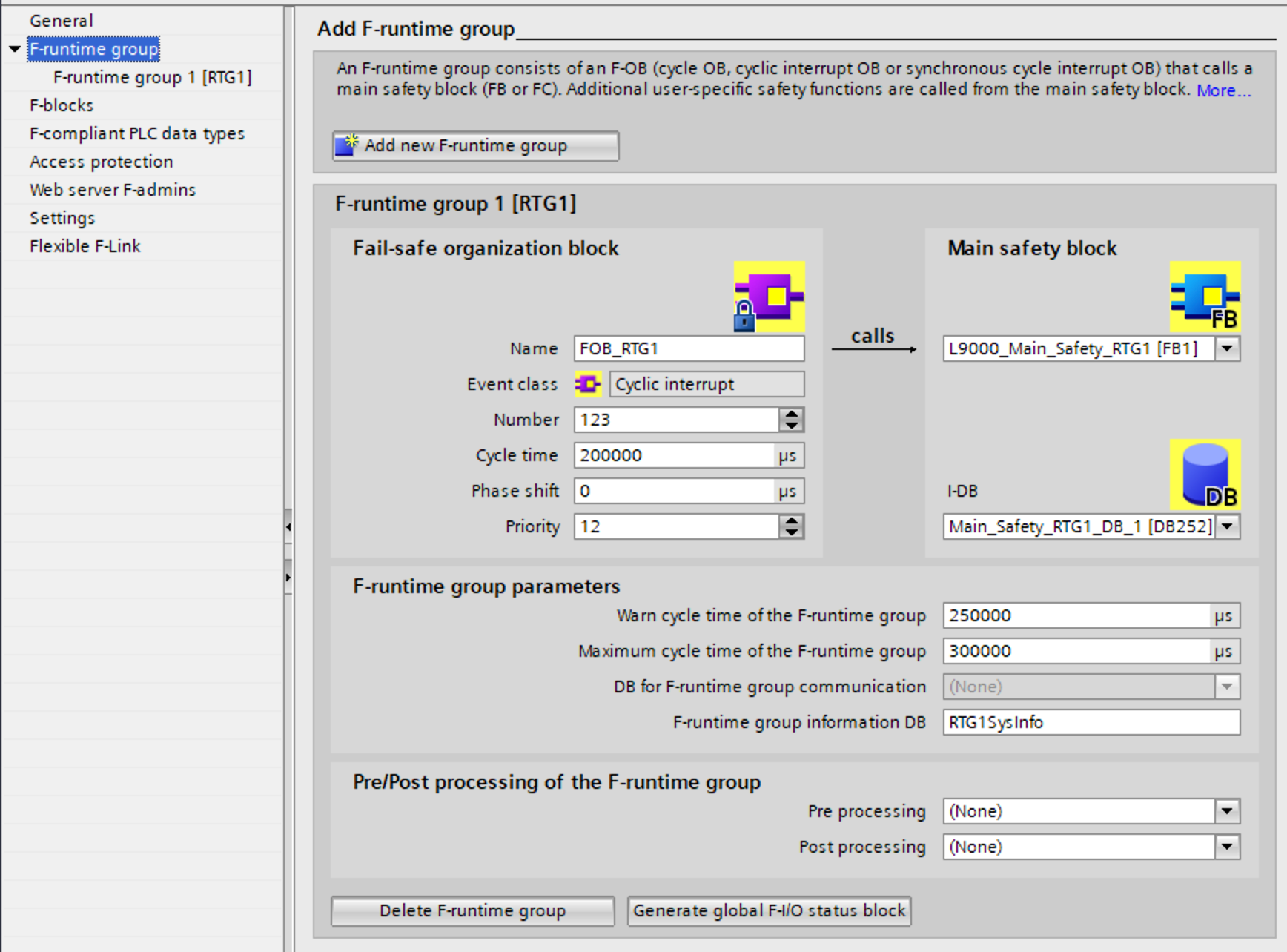
Against this backdrop, HS Automation approaches safety not as a module to be bolted on afterwards, but as a requirement that runs through the entire design process. Every piece of software is developed in-house and tailored to the specific operation of the customer's machines and lines, with particular attention to the integration of safety functions, to diagnostics and to future scalability.
This means programming the true brain of the plant, made up of PLCs, HMI systems, SCADA supervision and motion control, so that production performance and operator protection work in unison, in full compliance with international standards.
Electrical and software expertise in a single design workflow
The added value comes from combining electrical expertise with software expertise. The detailed electrical diagrams, produced with advanced CAD software such as EPLAN, and the safety logic developed by the company's engineers are part of a single, coherent design workflow that ensures traceability, compliance and ease of maintenance. This is an integrated approach that anticipates even the most demanding requirements of the new Machinery Regulation, where machine safety software takes on a leading role.
To find out more about how HS Automation structures this process, from defining the specifications through to software development, you can visit the dedicated design and engineering page.
Do you want to make your plants safer, more compliant and more efficient with tailor-made safety software? Contact HS Automation and request a personalised consultation: our engineers will help you identify the solution best suited to your company's needs.