An electrical panel is not truly complete the moment it is wired, but only when it passes the checks that attest to its safety, compliance and reliability. Certification and testing in fact represent the stage in which a manufactured item becomes a product ready for service, ensuring that every component meets the project specifications and the regulations of the target market. This is anything but a formality: an industrial electrical panel that is not correctly certified or tested exposes the plant to concrete risks in terms of personal safety, production continuity and legal liability.
The matter becomes more complex still when the supply is intended for different markets, since each country adopts its own standards and marks, from Europe to North America. In this article we look at what distinguishes certification from testing, what the main reference regulations are, and why internal control over the power section and the logic circuits is the best guarantee of quality for anyone purchasing certified electrical panels.
Certification and testing: two concepts not to be confused
In everyday language certification and testing are often used as synonyms, yet they refer to two distinct and complementary things. Understanding the difference is the first step in grasping what truly makes an electrical panel reliable, because one without the other is not enough to guarantee a safe and compliant product.
What the certification of an electrical panel is
Certification is the formal attestation that an electrical panel complies with a set of recognised norms and standards. It does not concern the single unit, but the observance of codified technical rules that define how the panel must be designed, built and documented in order to be placed on a given market. To certify therefore means to declare, with the manufacturer assuming responsibility, that the product complies with the safety requirements laid down by law and by the applicable regulations.
It is a concept that lives on the documentary and regulatory level: it defines the "according to which rules" a panel can be considered compliant, an aspect that changes significantly depending on the country of destination, as we will see below. It is for this very reason that managing certifications for target markets is a technical competence in its own right, not a mere bureaucratic formality.
What testing is, and why it does not coincide with certification
Testing, by contrast, is the set of practical operations by which the correct functioning of that specific panel is verified before it is put into service. If certification establishes the rules, electrical panel testing verifies that they are met in the field, test after test, on every single unit produced. It is the moment when the regulatory prescriptions translate into concrete measurements, functional tests and safety checks, so as to intercept any defects before the panel reaches the plant.
In other words, certification answers the question "which rules must it comply with", while testing answers "does this panel actually comply with them". They are two sides of the same guarantee of quality, and it is precisely their combination that distinguishes a genuinely reliable industrial electrical panel.
The reference regulations for certified electrical panels
Having established that certification defines the rules to be met, it remains to be understood what these rules concretely are. The answer is not univocal, because each market adopts its own regulatory system: a panel perfectly compliant for Europe is not automatically suitable for North America, and vice versa. Knowing the country of destination in advance is therefore decisive, as it shapes design choices, componentry and documentation from the earliest stages.
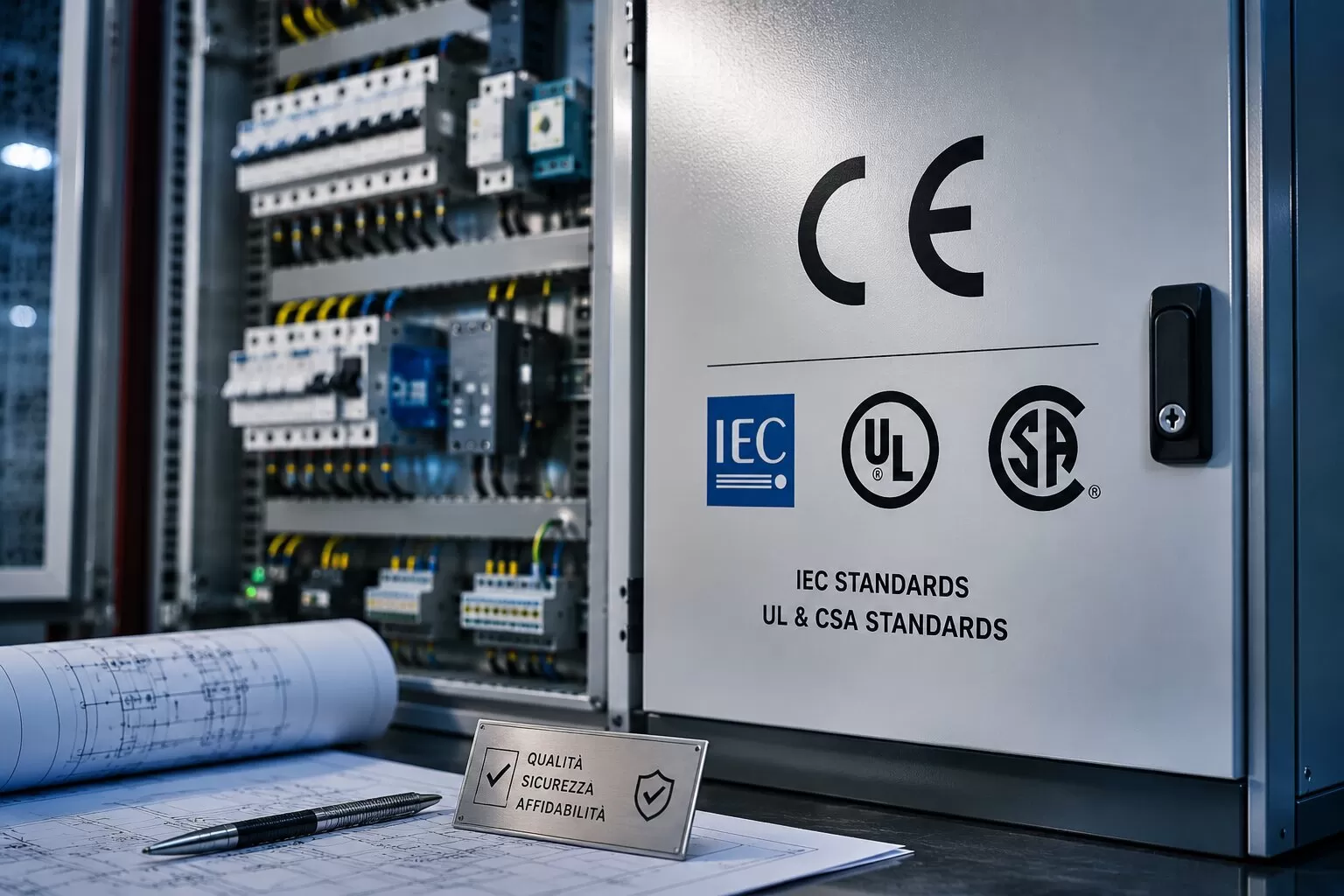
The European market: CE marking and IEC standards
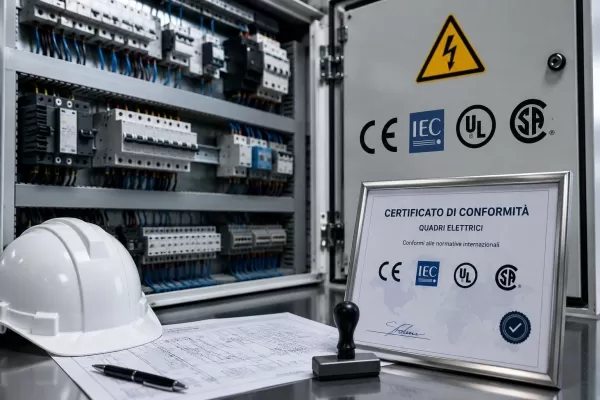
In the European Union the reference is the CE marking, through which the manufacturer declares that the panel complies with the applicable directives, starting with the Low Voltage Directive. On the technical level, the panel must meet the product standard IEC 61439 (transposed in Italy as CEI EN 61439), which governs the construction and verification of low-voltage assemblies of switchgear and controlgear. Alongside it stands the long-established CEI 64-8 for low-voltage electrical installations.
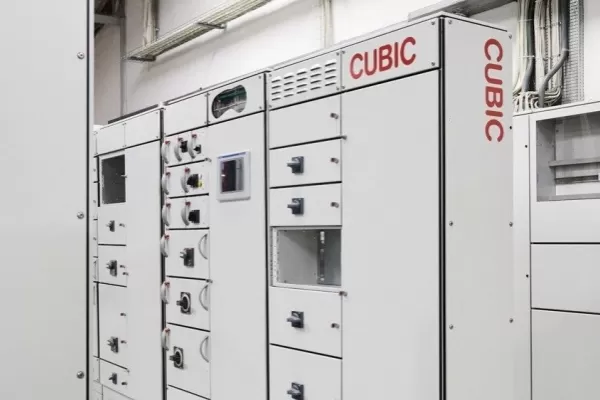
Complying with these standards is not merely a legal requirement, but a concrete operational advantage: starting from solutions whose components are already tested and certified, as is the case with the CUBIC modular system, it is possible to reduce significantly the time needed to obtain a compliant panel, without addressing every verification from scratch.
The North American market: UL and CSA standards
Those exporting to the United States and Canada must instead contend with a completely different regulatory framework. The reference for industrial automation panels is the UL 508A standard, which governs the construction of electrical panels intended for the US market with particular attention to protection against electric shock and fire.
For Canada, the CSA certification applies. These are not merely formal differences: sizing criteria, component requirements and marking methods all change, to the point that a panel conceived for Europe often has to be redesigned in order to be compliant overseas. This is where direct experience on international markets makes the difference, because it allows the project to be set up correctly from the outset rather than intervening after the fact.
Electrical panel testing: power and logic verifications
If regulations define the rules, it is testing that translates them into concrete trials. A reliable industrial electrical panel arises from the combination of two complementary families of verification, which examine the panel from two different but inseparable angles: the power section, that is the ability to distribute and manage energy safely, and the logic and control section, namely the intelligence that governs the operation of the plant. Neglecting either front means leaving half the panel unchecked.
Verifications on the power section
Testing of the power section ascertains that the panel is able to conduct and interrupt electrical energy in complete safety. This category includes the typical checks required by the product standards: the dielectric test (or applied voltage test), the continuity of the protective conductor, the measurement of insulation resistance and the verification of correct protection coordination.
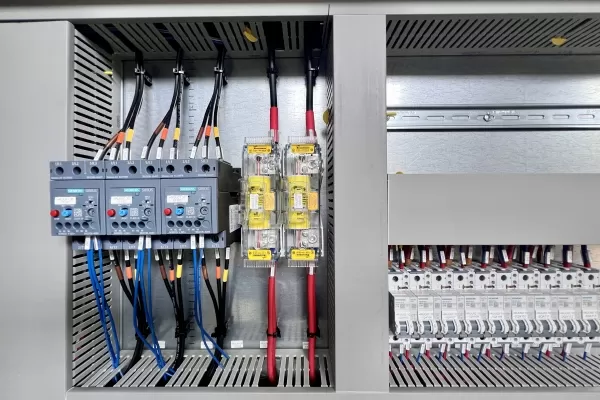
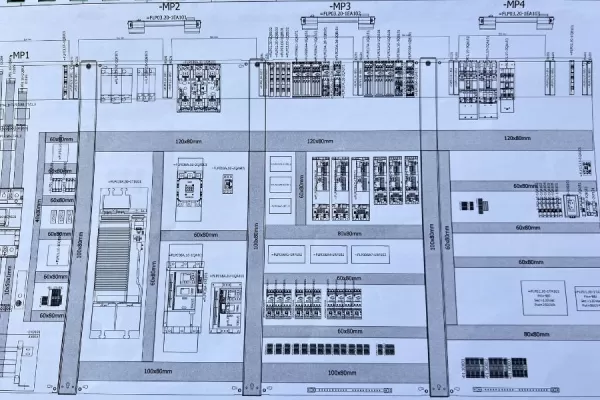
To these are added the visual inspections, which confirm the correspondence between the panel as built and the design schematic, as well as the quality of the wiring and of the tightening. These are trials that intercept the potentially most dangerous defects, those that can result in leakage currents, short circuits or risks to operator safety.
Verifications on the logic and control section
Electrical safety alone, however, does not guarantee that the panel does what it was designed to do. This is why testing also includes the verification of the logic and control circuits, in which the command sequences, the automatisms, the alarms and the safety conditions managed by the automation logic are tested. In this phase, real operating conditions are simulated to ascertain that every signal produces the expected response and that the safety interlocks intervene correctly.
It is the moment when hardware and software are put to the test together: a double level of control, of power and of logic, which represents the most complete form of electrical panel testing and the guarantee that the product delivered is genuinely ready for service.
Certified and tested electrical panels: the HS Automation approach
Certification and testing deliver their best when they are not entrusted to different parties, but governed by a single supply chain. At HS Automation, every industrial electrical panel undergoes complete internal testing, carried out both on the power section and on the logic and control circuits, before delivery to the client. This makes it possible to identify and resolve every critical issue in the factory, reducing time and unexpected setbacks during the delicate phase of on-site commissioning.
What makes the approach distinctive is the ability to manage certifications according to the country of destination, from CE marking for Europe to the UL and CSA standards for North America, an area in which the company has built up particular experience in supplies for the North American market. The advantage for the client is having a single point of contact overseeing the entire journey, from design through testing to after-sales support, with the traceability and technical consistency that only internal control of processes can ensure.
Do you need certified and tested electrical panels for your plant, ready for installation and compliant with the target market? Contact the HS Automation experts for a dedicated consultation.