Exporting technology and expertise beyond European borders is now one of the most pressing challenges facing Italian companies in the industrial automation sector. The North American market, in particular, offers enormous opportunities but requires a level of technical and regulatory expertise that cannot be improvised. Manufacturing electrical panels certified for the United States and Canada means meeting manufacturing, documentation, and safety standards that are vastly different from those required in Europe.
The differences are not limited to formalities. The components used, cable sizes, protective systems, labeling, and even the method of crimping cable lugs must comply with specific requirements set forth by UL 508A standards for the United States and CSA C22.2 No. 286 for Canada. In addition, there are local installation codes, such as the National Electrical Code (NEC) and the Canadian Electrical Code (CEC), which govern the conditions under which panels may actually be put into service.
For HS Automation, entering these markets does not simply mean adapting a product designed for Europe, but rather designing solutions from the ground up that meet North American requirements in every construction detail, with the same attention to detail and rigor that characterize all our projects. In this article, we analyze the relevant regulations, the design features of control panels intended for the U.S. and Canadian markets, and the strategic value of international certifications.
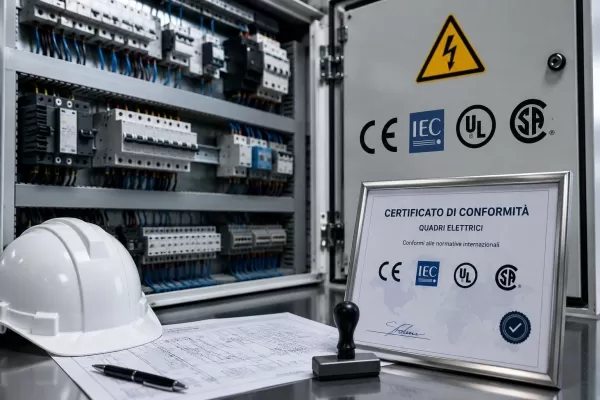
Relevant standards: UL 508A, CSA C22.2, and installation codes
The certification of an electrical panel intended for the North American market is based on two main standards, which define the design, construction, and testing requirements for the United States and Canada, respectively. A thorough understanding of these standards is the first step toward manufacturing electrical panels that can be installed and used without encountering bureaucratic or technical obstacles.
The UL 508A standard – Industrial Control Panels – governs the design and construction of industrial control panels for general use in the United States, including specific applications such as industrial machinery, air conditioning and refrigeration equipment, and crane control systems. The third edition of the standard, effective since April 2018, establishes specific criteria regarding components, wiring, protective devices, and accompanying documentation for the control panel.
In Canada, the applicable standard is CSA C22.2 No. 286 – Industrial Control Panels and Assemblies, which applies to industrial control panels with a voltage not exceeding 1500 V and must comply with the requirements of the Canadian Electrical Code, Part I. As of January 2022, this standard serves as the official reference for the design, construction, and certification of industrial control panels intended for the Canadian market.
These regulations are complemented by the National Electrical Code (NEC) for the United States and the Canadian Electrical Code (CEC) for Canada, which define the conditions for the installation and commissioning of control panels at local production sites. Compliance at both the manufacturing and installation levels is a prerequisite for operating in full compliance with regulations in these markets.
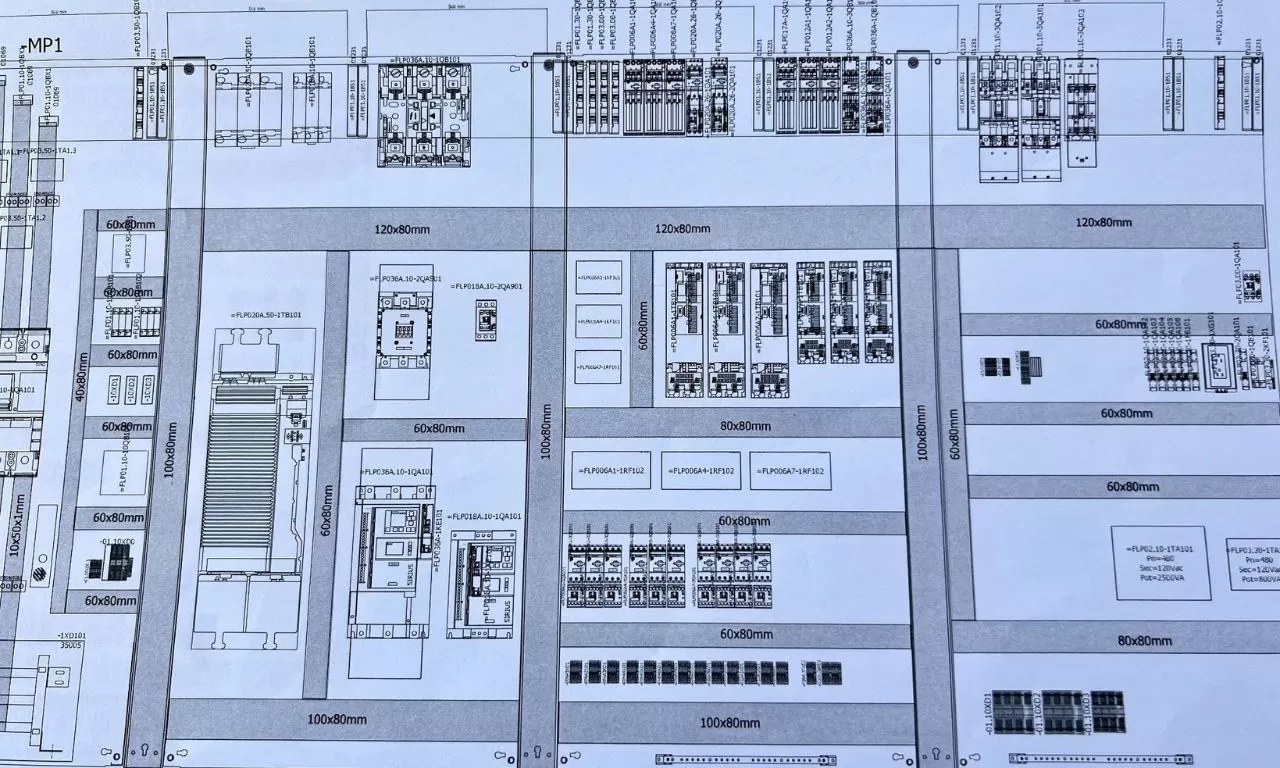
What changes in the construction of an electrical panel for North America
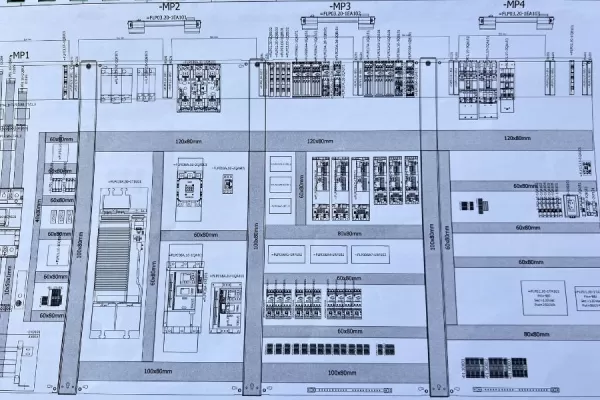
Designing a panel for the U.S. or Canadian market means rethinking many of the manufacturing decisions that are taken for granted in Europe. These differences affect every stage of the manufacturing process, from component selection to final labeling, and require specific tools, skills, and procedures.
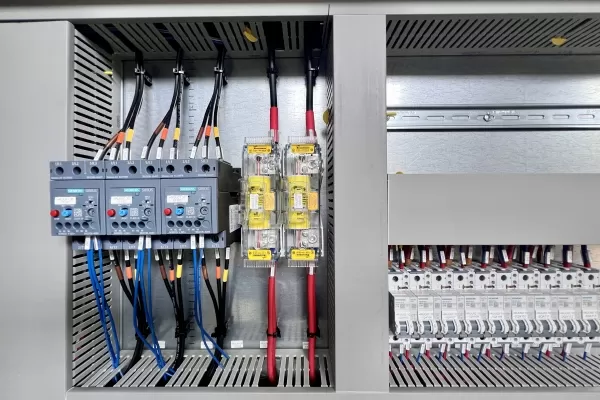
The components are the first point of focus. Every device installed must be approved or recognized by an NRTL (Nationally Recognized Testing Laboratory) such as UL or Intertek. It is not sufficient for a component to comply with European standards; it must be explicitly certified for use in the target market, otherwise the entire panel will be considered non-compliant.
The wiring also follows specific rules. The cables used must comply with the American AWG (American Wire Gauge) standard, which specifies different cross-sections and insulation types than those used in Europe. Even the crimping of cable lugs requires specialized techniques and tools, because the crimping methods specified by UL differ from those commonly used in switchgear intended for the European market. For those operating in both markets, this means having specific equipment and personnel trained in both procedures.
Finally, each certified panel is identified by a unique, non-replicable label bearing a specific serial number that certifies its compliance. This marking, which may only be applied by companies holding the required certification, represents the final step in a process that begins with the design phase and concludes with full product traceability.
The strategic importance of international certifications for export
Behind every electrical panel destined for the U.S. and Canadian markets lies much more than just a compliant product: it reflects a company’s ability to operate with credibility and consistency in extremely competitive markets, where the technical quality of Italian-made products has long been appreciated, but where every regulatory detail is scrutinized with the utmost care.
International certifications are not only a prerequisite for accessing these markets, but a genuine strategic asset. A valid certification demonstrates to the end customer that the supplier has undergone rigorous testing, has structured internal processes in place, and guarantees consistent quality in every single panel produced. In many cases, maintaining certification requires periodic inspections by independent inspectors, who verify compliance with regulatory requirements on a quarterly or annual basis.
For HS Automation, investing in strict compliance with international regulations is a choice that aligns with its corporate identity. Every control panel exported embodies not only the technical expertise of a specialized team, but also complete component traceability, test documentation, and compliance with the highest certification standards required by the target markets. This commitment enables us to tackle complex projects with confidence and support clients operating on a global scale, maintaining a high level of reliability at every stage of the process.
Exporting quality: the value of a knowledgeable partner in foreign markets
The North American market rewards those who can combine technical expertise with regulatory knowledge. It is not enough to simply build a functional electrical panel: one must understand the codes, anticipate the requirements of local authorities, select the right components, and document every design decision in order to pass the inspections conducted by certification bodies.
For Italian companies operating or planning to operate in the U.S. and Canada, partnering with a supplier that understands these complexities means drastically reducing the risks associated with non-compliance, installation delays, or product recalls. An electrical panel that complies with UL 508A or CSA C22.2 No. 286 standards from the outset is a panel that arrives on-site ready for installation, without the need for corrective work and without additional costs.
HS Automation approaches every project intended for the North American market using the same methodology we apply to all our projects: a thorough analysis of specifications, a rigorous selection of components, design in compliance with relevant standards, and documented testing. Our goal is to enable our customers to enter these markets with robust, certified, and fully operational solutions, showcasing the quality of Italian manufacturing through a product that meets international standards.
Are you considering a project for the United States or Canada? Find out how we can help you develop electrical panels certified for the North American market.