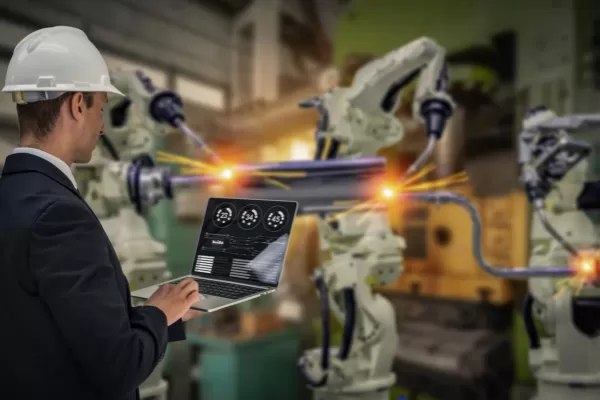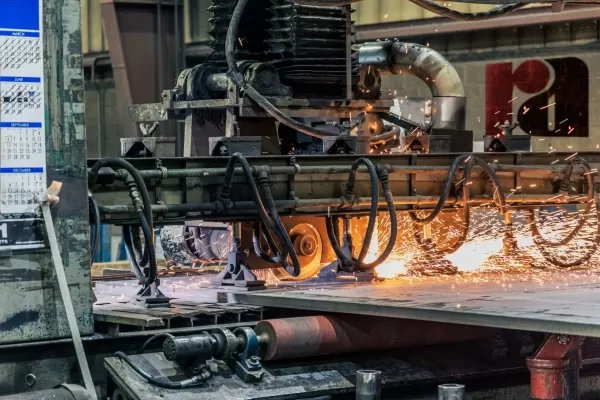
Industrial automation in metalworking: from extrusion to die-casting
The steel industry and, more generally, metal processing are among the most demanding production environments of all: high temperatures, continuous cycles, materials in motion and extremely narrow margins for error. In this context, automation systems are not a mere technological accessory, but the nervous system that makes it possible to work safely, keep the process under control and achieve consistent performance over time.
In this article we will see why metalworking calls for advanced automation solutions, how these come into play across the entire production chain, from aluminium extrusion through to die-casting, and how the three pillars of safety, control and performance translate into concrete benefits for companies. In the final section we will look at the approach of HS Automation, which has been designing tailor-made systems for this sector for over twenty years.
Why metalworking requires advanced automation systems
Few sectors put a control system to the test as much as metal processing does. Furnaces, presses, casting and cutting lines often run on a continuous cycle, with extremely high temperatures and constant mechanical stress. Under these conditions, reliability is not an option but the very precondition for production.
A complex, high-temperature, continuous-cycle sector
Running a modern steel plant means coordinating dozens of variables at once: furnace temperatures, pressures, feed speeds, material positioning and cycle times. Manual operation could guarantee neither the precision nor the repeatability required, and above all it would expose operators to significant risks. This is where industrial automation becomes decisive, because it hands over to the control logic the continuous supervision of the process and the execution of the most critical operations.
The role of automation systems
Automation systems collect data from the field in real time through sensors and transducers, process it via the programmable controllers and drive actuators, motors and robots with the utmost precision. The result is a production process that regulates itself, flags anomalies promptly and keeps waste of material and energy to a minimum. In a sector where every machine stoppage carries a high cost, this ability to keep the flow under control is a direct competitive advantage.
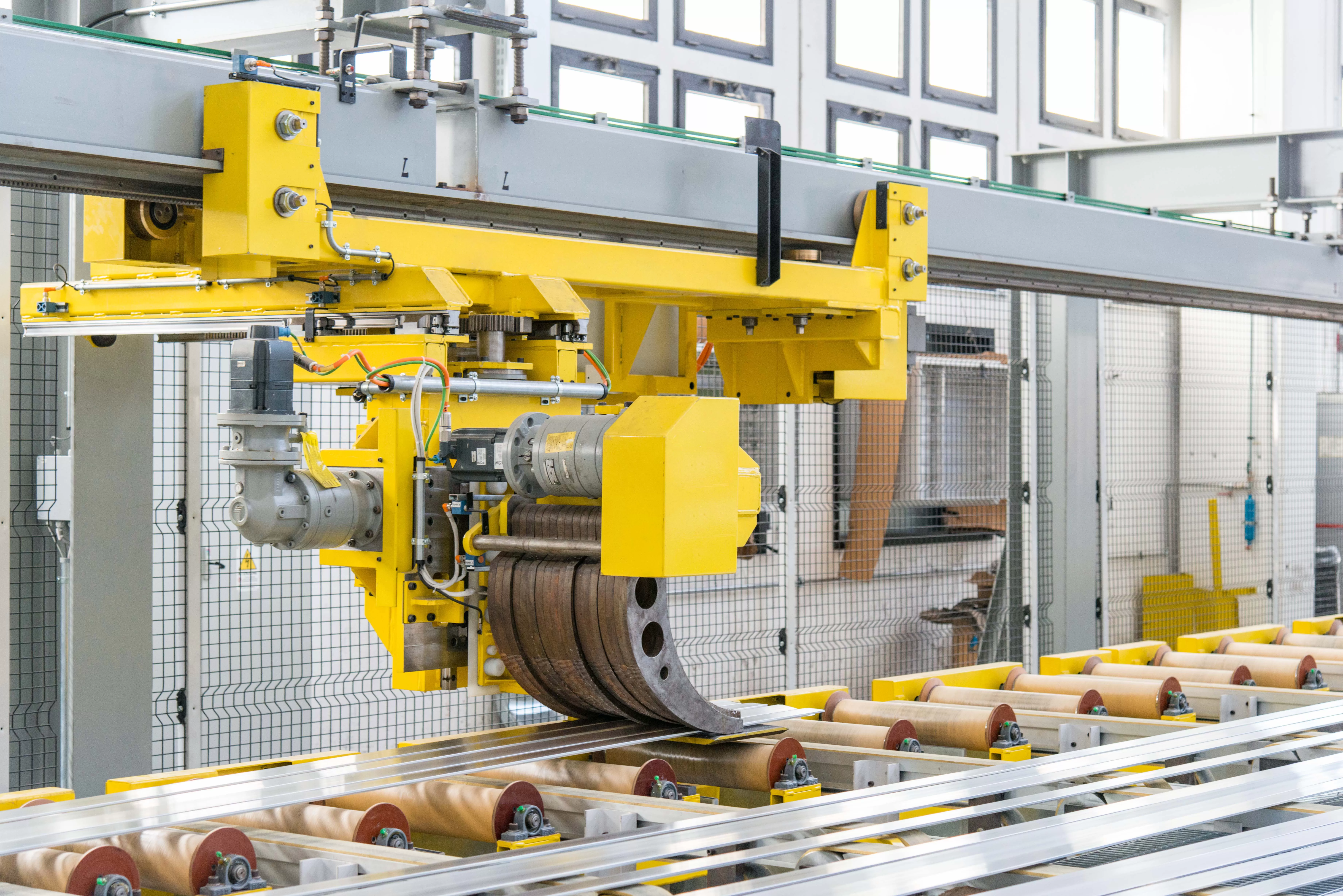
From extrusion to die-casting: automation along the metals supply chain
Automation does not act on a single isolated stage: it accompanies the metal along its entire transformation journey, adapting to the specific needs of each process.
Automation in aluminium extrusion
In aluminium extrusion, an automated system governs the entire chain: presses, furnaces, cooling lines, profile handling and cutting operations. The synchronisation of these stages is what determines the quality of the finished profile and the productivity of the line. Advanced control software makes it possible to manage production recipes, adjust parameters according to the product and trace every batch, a requirement that is increasingly demanded, especially in supplies destined for the automotive sector.
Die-casting and drawing: precision and integration with robotics
In die-casting, automation coordinates the work cells, interfacing with articulated robots, molten-metal dosing units and auxiliary equipment to achieve fast, repeatable cycles in complete safety. The same applies to brass drawing plants, where the integrated control of the drawing lines, straightening machines and cutting machines ensures continuity and consistent quality. In all these cases, the integration of mechanics, electronics and software is what makes it possible to turn individual machines into a coordinated line that can be governed from a single system.
Safety, control and performance: the three pillars of automation in the steel industry
The benefits of a well-designed automation system can be traced back to three closely interrelated dimensions, the same ones that guide the design of every solution intended for metalworking.
Safety of operators and processes
Safety is the absolute priority in environments where molten metals and high-energy machinery are handled. Automation keeps the operator away from hazardous areas, constantly monitors the condition of the plant and brings the machine to a safe state at the first sign of an anomaly, integrating the protection logic directly into the control system and its electrical panel.
Control, supervision and production performance
Control takes shape in the supervision systems, the human-machine interfaces (HMI) and the motion control logic, which give the operator a clear and immediate view of the plant's status. From this monitoring capability comes the third dimension, performance: data gathered in real time, precise diagnostics and fine-tuning of parameters translate into greater productivity, fewer rejects and consistent quality. Safety, control and performance are therefore not separate objectives, but the product of a single automation architecture designed with coherence.
HS Automation's automation systems for metalworking
Against this backdrop, HS Automation brings over twenty years of hands-on experience in precisely the fields of aluminium extrusion, die-casting and brass drawing, with systems installed in more than fifty countries. The company does not simply supply hardware: it develops the machine-control automation software in-house, tailoring it to the operating dynamics of each individual plant and working with the leading market platforms such as Rockwell Automation, Siemens and Schneider Electric.
Tailor-made solutions and retrofits for every plant
The strength of this approach lies in the ability to support the customer throughout the entire journey, from system design through to commissioning, integrating safety, control and performance into a single solution consistent with the principles of Industry 5.0. Particularly appreciated is the option of carrying out retrofit work, which makes it possible to upgrade existing plants and improve their performance without replacing them entirely, with a clear return on investment. To explore in detail the solutions dedicated to this sector, you can visit the page on metalworking.
Do you want to make your steel plant safer, better controlled and higher-performing with tailor-made automation systems? Contact HS Automation and request a personalised consultation: our engineers will identify the solution best suited to your production process.