
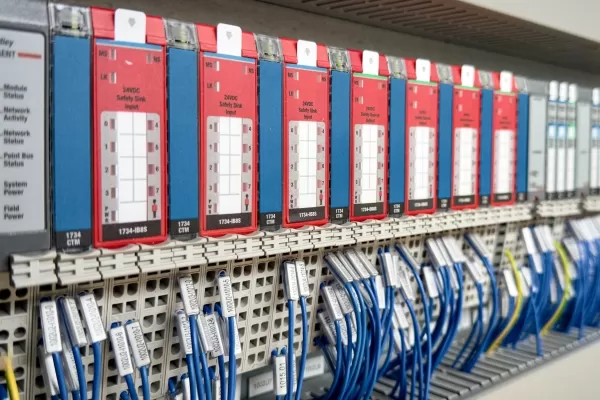
Industrial control panel wiring is a critical phase in the construction of safe, efficient, and fully compliant industrial systems. It is not merely a matter of connecting components, but a structured technical process that requires specialized expertise, precision workmanship, and a thorough understanding of applicable standards and regulations.
In the context of industrial electrical panel wiring, every detail directly impacts overall system reliability — from material selection and conductor routing to connection identification and protection against overloads and short circuits. Wiring executed according to rigorous engineering principles ensures not only operational continuity, but also enhanced safety for both personnel and equipment.
In today’s industrial environment, increasingly focused on quality and regulatory compliance, electrical panel wiring plays a strategic role. It contributes significantly to the durability, maintainability, and overall performance of the control panel within complex manufacturing operations.
Industrial control panel wiring: function, structure, and technical requirements
Industrial control panel wiring encompasses all the operations required to connect components inside the panel in an organized and functional manner, ensuring proper power distribution and effective process control. In industrial environments, this activity plays a strategic role, as it directly affects system safety, operational efficiency, and overall reliability.
When wiring is designed and executed according to rigorous technical standards, it optimizes internal space, simplifies maintenance procedures, and reduces the risk of faults or malfunctions. High-quality workmanship, combined with compliance with applicable regulations, is a defining factor in building durable and high-performance industrial control panels capable of operating reliably in demanding production environments.
Structure and organization of industrial panel wiring
In industrial electrical panel wiring, internal organization follows precise engineering principles. Conductors must be routed in an orderly manner, with a clear separation between power circuits and control circuits to minimize electromagnetic interference (EMI) and enhance operational safety.
The use of wire ducts, terminal blocks, and identification systems helps maintain a clean and easily readable layout. Proper wire numbering, component labeling, and up-to-date technical documentation facilitate testing, inspection, and long-term maintenance activities, ensuring reliability and serviceability throughout the panel’s lifecycle.
Components e materials used
Material selection is critical to ensuring long-term durability and regulatory compliance. Conductors must be properly sized according to rated current, load conditions, and environmental factors, while protection devices safeguard the system against overloads and short circuits.
In industrial control panel wiring, commonly used components include properly insulated cables, UL-listed or certified terminal blocks, heavy-duty wire ducts resistant to mechanical stress, and fastening systems designed to maintain organization and structural stability even in demanding industrial environments.
A methodical and standards-driven approach to panel wiring helps prevent future failures, ensuring operational continuity and full compliance with applicable technical and safety requirements.
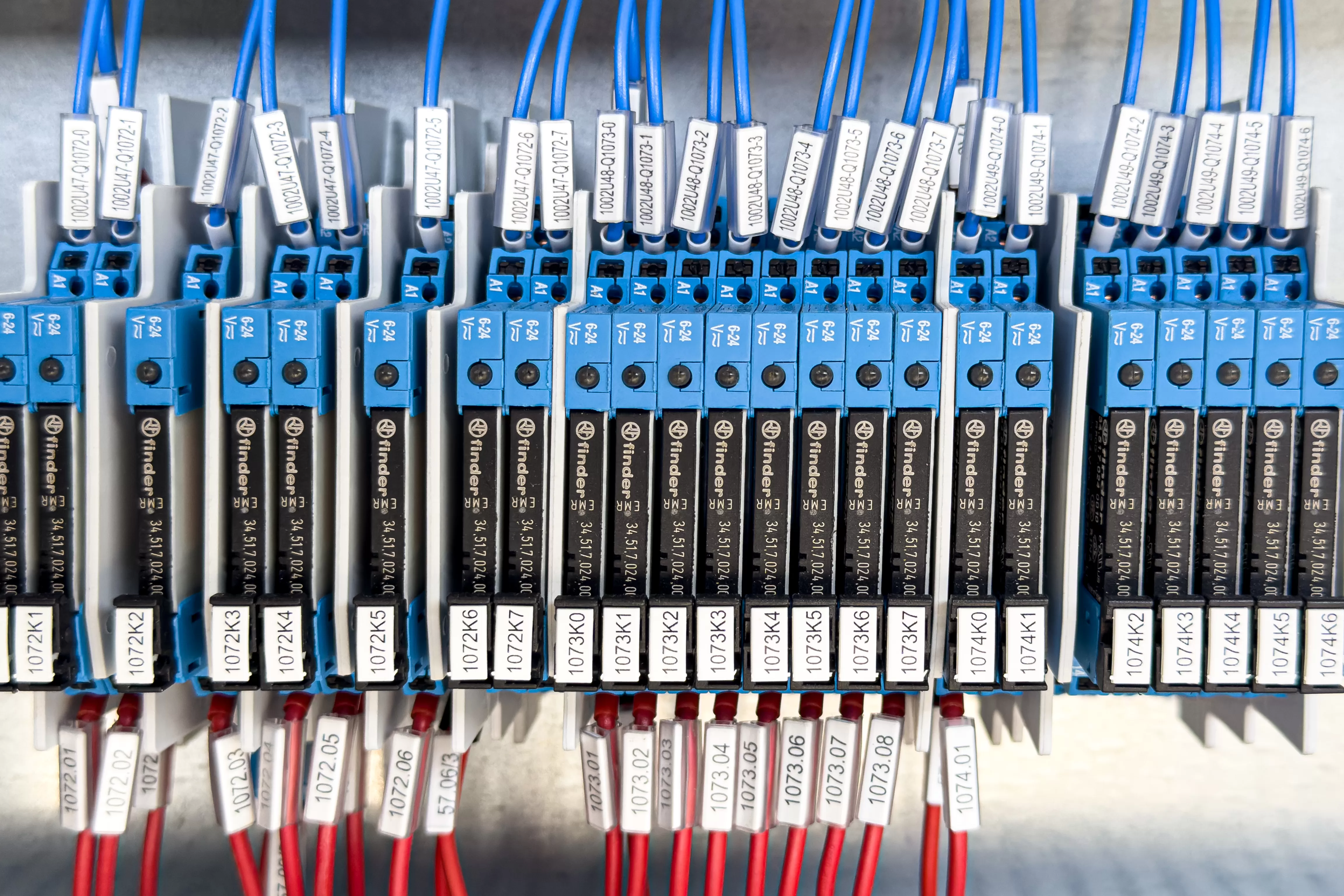
Regulatory compliance in industrial electrical panel wiring
In industrial control panel wiring, compliance with technical standards is not optional — it is a fundamental requirement. Adherence to applicable regulations ensures safety for both personnel and equipment, reduces the risk of penalties, and guarantees that the control panel can be installed and commissioned without operational or legal issues.
Electrical panel wiring must therefore follow clearly defined criteria regarding conductor sizing, protection against direct and indirect contact, proper circuit identification, and adequate separation between power and control wiring. These requirements are essential to ensure safe operation, long-term reliability, and compliance with recognized industry standards.
Applicable technical standards
Key regulatory frameworks governing industrial electrical panel wiring include:
- CEI standards for the design and installation of electrical systems
- IEC standards for the construction of industrial control panels
- European safety directives and CE marking requirements
- UL certifications for control panels intended for the North American market
For systems designed for export, compliance with UL standards is particularly strategic. Meeting these requirements ensures that industrial control panel wiring aligns with internationally recognized safety criteria, facilitating market access and guaranteeing reliability across different regulatory environments.
Adhering to these standards strengthens not only regulatory compliance but also the overall credibility and performance of the electrical installation.
Safety, reliability and long-term performance
Industrial control panel wiring executed according to rigorous engineering standards forms the foundation for ensuring operational continuity and protecting industrial systems. Improper conductor routing, incorrect torque on connections, or the use of unsuitable materials can compromise overall system safety, leading to overheating, short circuits, or premature failures.
In the context of industrial electrical panel wiring, workmanship quality directly affects long-term performance stability. An organized circuit layout, proper separation between power and control wiring, and the use of certified components significantly reduce the risk of anomalies and enhance the overall reliability of the control panel.
Failure prevention and risk management
Clearly structured and standards-compliant industrial control panel wiring simplifies inspection and verification activities, allowing potential issues to be identified at an early stage. Effective failure prevention also depends on proper conductor sizing, mechanical protection of cables, and the use of fastening systems designed to maintain stability even in production environments exposed to vibration or mechanical stress.
Reducing electrical risk is not only about protecting equipment, but also about safeguarding personnel. Operators must be able to perform inspections and maintenance tasks under the highest safety conditions, supported by well-organized and properly documented wiring systems.
Maintenance and long-term inspection
Well-organized and properly documented industrial control panel wiring simplifies both routine and corrective maintenance activities. Clear connection traceability, accurate circuit identification, and the availability of updated electrical schematics enable faster and more targeted interventions, reducing plant downtime.
Investing in high-quality industrial electrical panel wiring reflects a long-term strategic approach, where safety, efficiency, and reliability become integrated components of the overall manufacturing strategy.
HS Automation’s approach to industrial control panel wiring
Delivering high-quality industrial control panel wiring requires a structured methodology, strong technical expertise, and rigorous control of every operational phase. At HS Automation, panel wiring is a carefully managed process that integrates engineering design, component selection, and final verification to ensure long-term safety, compliance, and reliability.
Each activity is carried out according to precise technical procedures, ensuring organization, traceability, and adherence to applicable standards — including certifications required for international markets. The quality of panel wiring is closely linked to the selection of components and the hardware solutions installed within the control panel.
To learn more about our expertise in component integration and system design, visit our dedicated hardware section, where we present the technical solutions that form the foundation of our industrial systems.
Do you have a project or are you building a new control panel?
The HS Automation engineering team is ready to support you in the design and industrial control panel wiring process, delivering tailored solutions aligned with applicable standards and the specific requirements of your plant.
Contact us for a technical consultation and discover how to ensure safety, compliance, and reliable performance for your electrical control panels.